18 Oct 2026
Mapping Regulatory Pathways in Botanical Product Availability
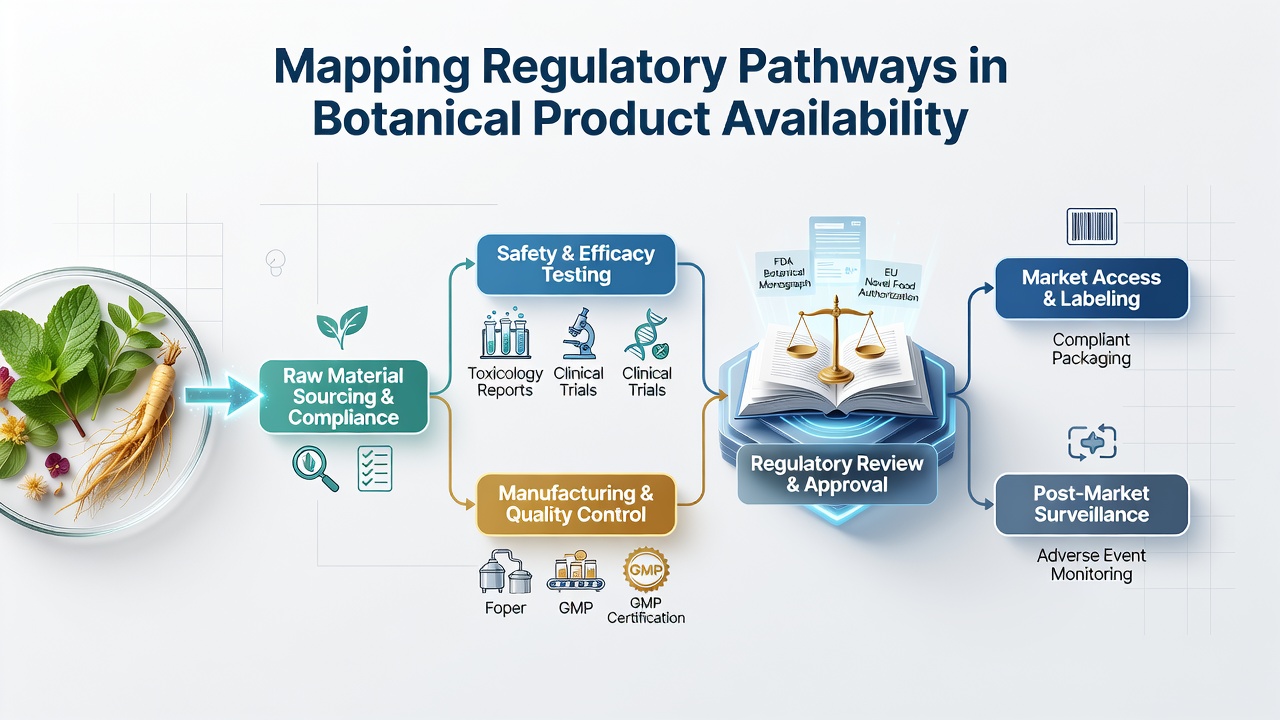 Regulatory pathways for botanical products shape how herbal materials reach markets across different regions, and these systems combine statutory requirements with agency oversight that varies by jurisdiction. Experts track these routes through documentation on safety data, quality standards, and labeling rules that determine whether a product qualifies as a dietary supplement, traditional medicine, or therapeutic good. Data from government agencies show that classification decisions often hinge on intended use claims and the level of processing applied to raw botanicals.
Key Regulatory Frameworks in Major Markets
In the United States the Dietary Supplement Health and Education Act of 1994 established the primary route for botanical products sold as dietary supplements, which means manufacturers notify the Food and Drug Administration before marketing while remaining responsible for safety evidence. Researchers note that this notification process creates a lighter pre-market burden compared with drug approvals, yet post-market surveillance through adverse event reporting continues to guide enforcement actions. Figures from agency records indicate thousands of botanical ingredients have entered commerce under this pathway since its inception.
European authorities operate under the Traditional Herbal Medicinal Products Directive, which requires registration dossiers containing bibliographic evidence of traditional use for at least 30 years, including 15 years within the European Union. Observers point out that this route allows simplified authorization for products meeting quality and safety criteria without full clinical trial packages. National competent authorities review applications, and mutual recognition procedures help companies navigate multiple member states once initial approval occurs.
Additional Regional Approaches and Harmonization Efforts
Health Canada maintains a natural health products framework that assigns each botanical item a unique identification number after pre-market assessment of safety, efficacy, and quality. This licensing model requires product-specific evidence packages and site licensing for manufacturing facilities, which creates a distinct pathway from both the American and European systems. Recent updates to monographs have streamlined reviews for common botanicals while maintaining documentation standards.
Australian regulators classify botanical products under the Therapeutic Goods Act, where low-risk items may follow a listed medicines pathway with sponsor self-certification supported by evidence guidelines. Higher-risk preparations require full registration with clinical data. The Therapeutic Goods Administration publishes annual statistics that reveal steady growth in listed botanical entries alongside periodic compliance reviews.
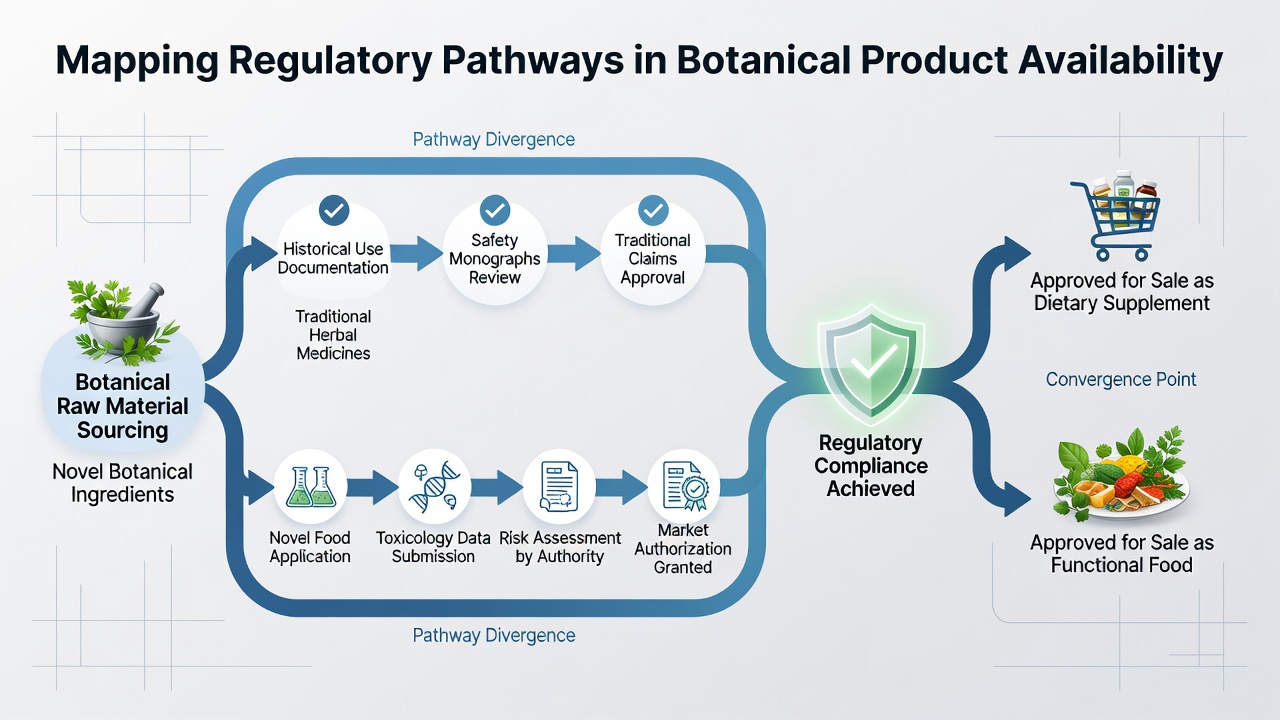
International bodies such as the World Health Organization have issued technical guidelines that influence national policies, yet full harmonization remains incomplete. Trade agreements sometimes reference regulatory cooperation on botanical ingredients, which can reduce duplication in testing requirements when authorities accept foreign data under specific conditions. Industry reports document ongoing pilot programs aimed at aligning pharmacopoeia standards for identity and purity testing.
October 2026 Developments and Ongoing Tracking
As October 2026 approaches, several agencies have scheduled public consultations on updated guidance for novel botanical extracts and sustainability sourcing documentation. These sessions allow stakeholders to comment on proposed changes to analytical method validation and contaminant limits. Records from prior cycles show that such consultations often lead to refined monographs that clarify testing frequencies and acceptance criteria for heavy metals and microbial counts.
Mapping tools developed by regulatory agencies and research institutions help companies visualize submission requirements, timelines, and responsible authorities across borders. These resources incorporate searchable databases of approved ingredients and case summaries that illustrate how similar products have been classified in different jurisdictions. Updates to these tools occur periodically to reflect new monographs or enforcement precedents.
Conclusion
Regulatory pathways for botanical products continue to evolve through agency guidance, legislative amendments, and international coordination efforts. Accurate mapping requires attention to classification rules, evidence standards, and post-market obligations that differ by region yet share common goals of consumer protection and product quality. Those who monitor these systems rely on official publications and consultation outcomes to maintain compliance as requirements are refined over time.